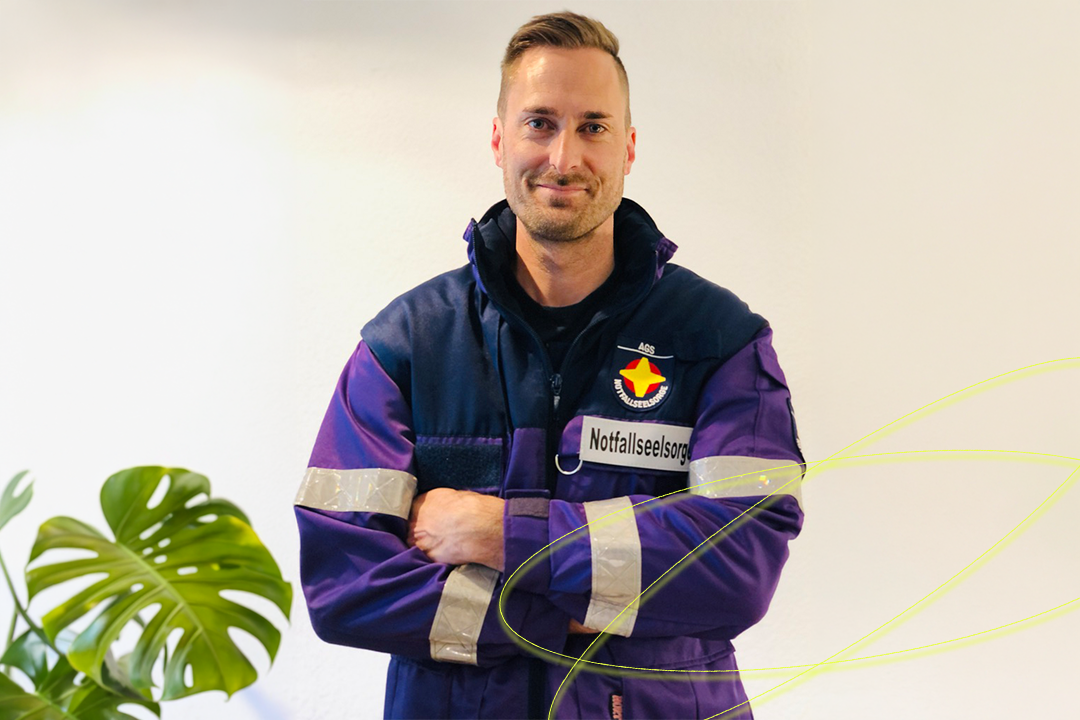
I've been working as an emergency chaplain since 2021, and in 2024 I additionally completed the training in PSNV-E (psychosocial emergency care for first responders). This training takes about six months and doesn't just impart theoretical knowledge - it also teaches practical skills that translate remarkably well into business.
In the training, we learn how to hold conversations in extreme situations, applying methods and principles that are just as invaluable in business life. These include communication techniques - how to stay calm and communicate effectively in stressful, distressing situations. But also tactical approaches for quickly assessing a situation and taking the right action. Important principles such as the art of stepping back and setting your own ego aside, so you can support those affected as well as possible. This servant-leadership philosophy is just as decisive in management.
In emergency chaplaincy, I've learned how important it is to pay attention to detail. Details are crucial for establishing good communication. But details can also be potentially risky - a small thing, like a stuffed animal my own children also have at home, can hit me emotionally in the middle of a call-out. This realization has made me more mindful overall.
Training in emergency chaplaincy covers not only conversation techniques and tactical skills for the field, but above all the art of stepping back as a person. Those we support often can't even remember us afterwards, and that's exactly how it should be. The ability to set your own ego aside and place the situation above yourself is also hugely important in modern management. To be honest, I consider this one of the most important management virtues of our time.
Emergency chaplains share a similar sense of humor, stick together, support one another, and look out for each other. I hope my employees feel exactly the same way when they think of our team. A strong network and a supportive community are indispensable in both worlds.
In emergency chaplaincy, you learn to trust in people's strength. The same is true for my employees - I trust that they can and will master their tasks. In extreme situations and moments of stress at work, it's important to stay calm, first get an overview, and then set clear priorities. These principles help me lead my team effectively.
Confronting death has made it clear to me that we should move forward boldly and without fear. It has also shown me how important it is to have a meaningful, strengthening community around you. These insights shape my leadership style and my appreciation for life and for the time my employees give.
Being called out in the middle of the night into an extreme situation, and being allowed to help, gives me more than words can capture. It reminds me that life can end at any moment. I carry this sense of appreciation into my role as a father just as much as into my role as CEO, and I try to weave this attitude into our working principles. Because in the end, it's the relationships between people and the community around us that make our professional and personal growth possible in the first place.
As CEO, my heart beats for building and growing starmate. My day-to-day is a mix of strategic foresight and the drive to just get things done.